In 2025, the Protect Fish project carried out several fieldwork activities in Denmark. This combining electrofishing surveys, cormorant deterrence, and hydrological measurements. Early results indicate a notable increase in juvenile grayling abundance, while ongoing monitoring and European collaboration aim to assess the effectiveness of conservation measures and support habitat modelling at river-basin scale.
Read below the full overview of our 2025 activities in Denmark.
Scientific monitoring and field activities
Our partner – DTU Aqua – carried out extensive electrofishing surveys in 4 different rivers: Vidå, Varde å, Storeå and Skjern å.
Although the full analysis of these collected data is still ongoing, preliminary results indicate positive trends across all rivers. Most notably, a substantial increase in the abundance of juvenile grayling is observed. This positive development is consistent across the monitored sites. At this stage, however, it is too early to determine whether this increase can be directly attributed to the cormorant deterrence measures implemented by the project or the general benefit of a mild winter with unusually few cormorant visits.
Figure 3 illustrates this increase in juvenile grayling on the Grindsted Å stretch included in the Protect Fish project.
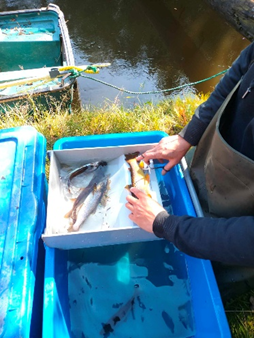
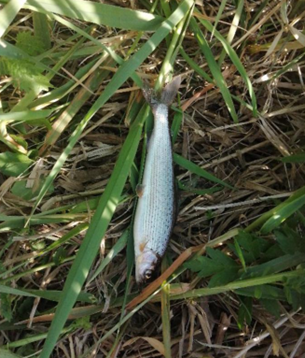
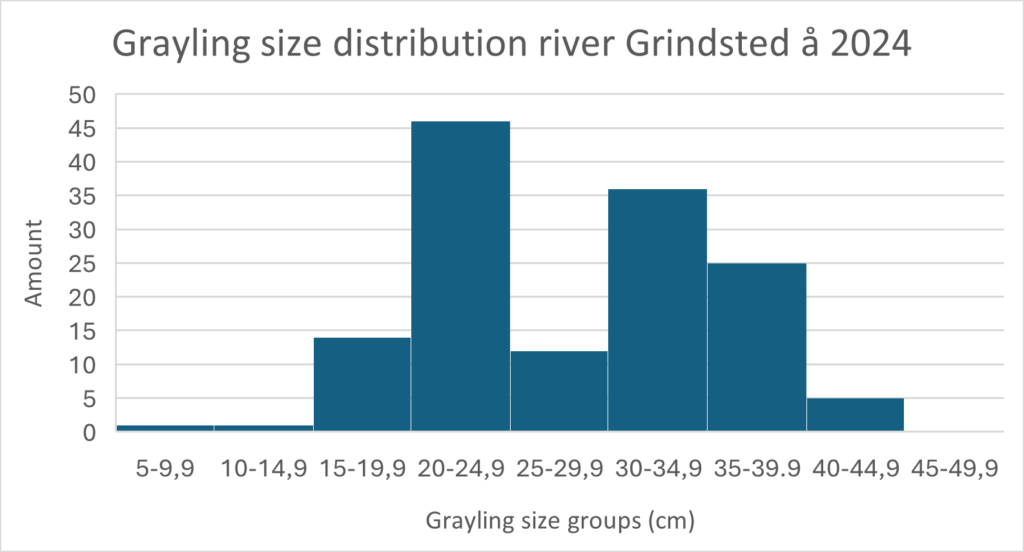
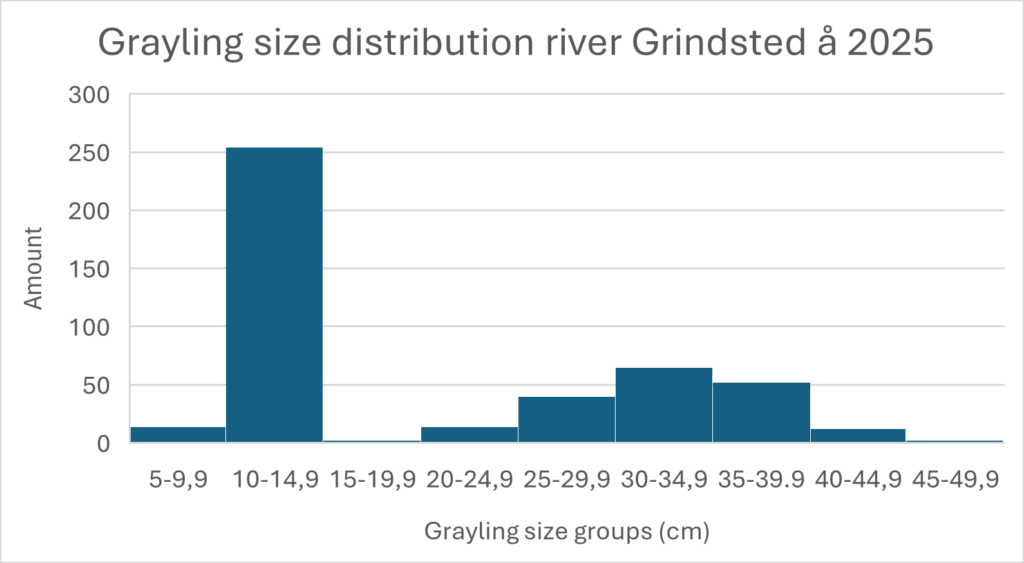
Figure 3. Size distribution of grayling for the project section of the river Grindsted å, 2024 and 2025. The size classes underlined in red are juveniles. Note different Y-axis scale.
Cormorant deterrence and volunteering coordination
A big part of the project’s work in Denmark is to organize cormorant deterrence activities (incl. organisation patrolling activities at the selected rivers, scaring away the birds from the testing sites and local management). This at the selected river stretches – monitored by DTU Aqua and AU. Following this, they are organised in close cooperation with local volunteers, e.g. the Danish angling association ‘Danmarks Sportsfiskerforbund’.
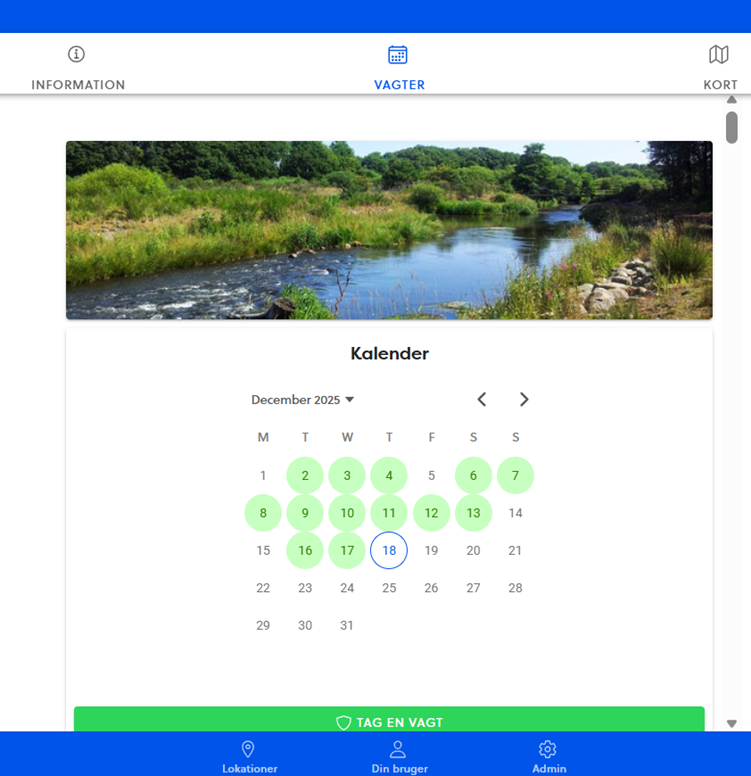
To facilitate coordination between our scientists and the many volunteers, the project has developed a dedicated online planning application. Through this tool, local volunteers can schedule deterrence activities, monitor their efforts, and record progress. The data collected via the app can be directly extracted and analysed by DTU Aqua’s project team. This enables a systematic comparison between deterrence intensity and fish abundance, across different river sections, supporting the assessment of potential correlations.
Wildlife camera – a valuable tool to monitor the project’s effectiveness
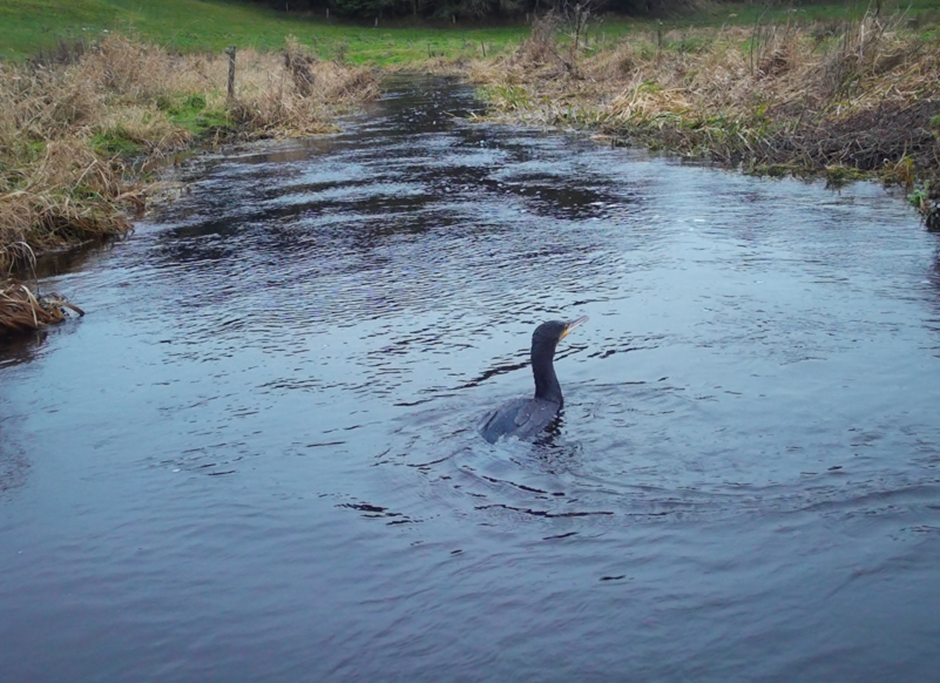
To evaluate the effectiveness of cormorant deterrence measures (cormorant presence and their behaviour), more than 40 game cameras have been installed along the selected river stretches by DTU Aqua’s experts.
By analysing the images captured, the project aims to assess whether river stretches subject to deterrence and hunting show reduced cormorant activity compared to control sections where no such measures are applied. While the data collection is complete, the analysis is still underway, and conclusions will be drawn once results are available.
Based on the project’s underlying assumptions, a notable decrease of cormorant visits is expected on stretches where deterrence activities are actively implemented.
Hydrological measurements and EU-wide collaboration
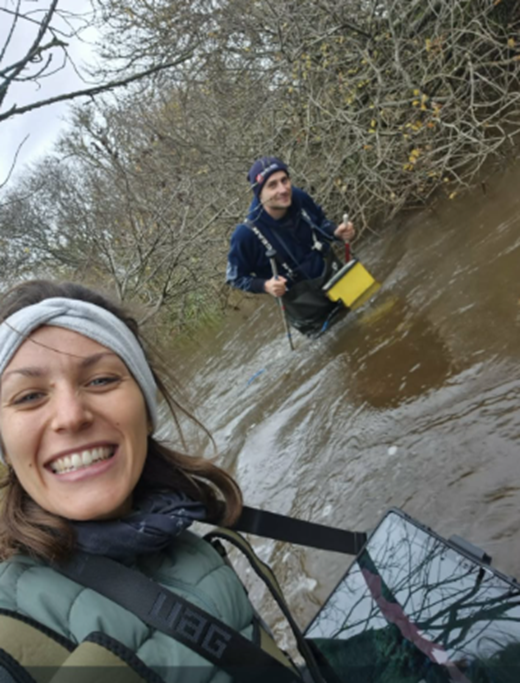
In parallel with biological monitoring, DTU Aqua’s experts have carried out hydrological measurements. This as part of a collaboration with the ProtectFish’ Polish partners from the Institute of National Inland Fisheries.
These measurements were conducted on the river Storeå in Western Denmark and will contribute to the development of a predictive model for grayling habitat suitability. The model is intended to be applicable across a wide range of European rivers. Furthermore, it will strengthen the scientific basis for conservation and management efforts beyond the Danish context.