ProtectFish published its first policy brief. This document presents the project’s first scientific findings and recommendations for the conservation of threatened freshwater fish populations in Europe.
This policy brief is based on research results and is addressed to EU, national and regional authorities responsible for freshwater biodiversity, river-basin management, protected-species management and conservation-status assessment.
The document will help inform the implementation of the Nature Restoration Regulation, improve the reporting of Habitat Directive’s Art.17, and support evidencebased decision-making under the Water Framework Directive, while contributing to the objectives of the EU Biodiversity Strategy for 2030.
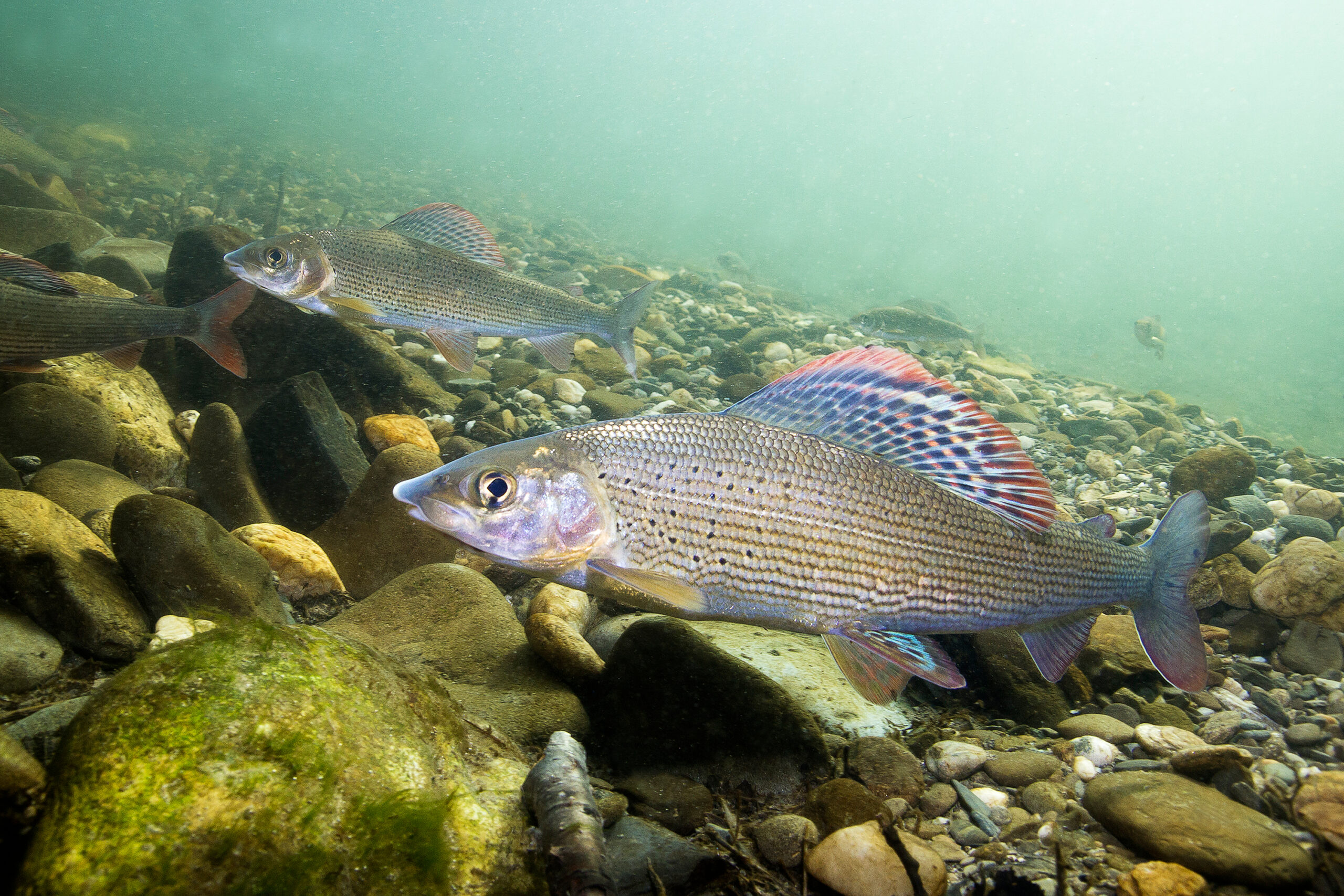
This first ProtectFish policy brief highlights the need to address the multiple pressures affecting freshwater ecosystems & fish species as e.g. Grayling.
Cormorant predation adds to the pressure already impacting Europe’s freshwater fish
ProtectFish research shows that cormorant predation has direct and measurable impacts on fish populations, including mortality of adult fish and even non-consumptive mortality caused by stress or injuries.
The findings also indicate that habitat complexity measures alone are insufficient to substantially reduce predation pressure under conditions of high predator density.
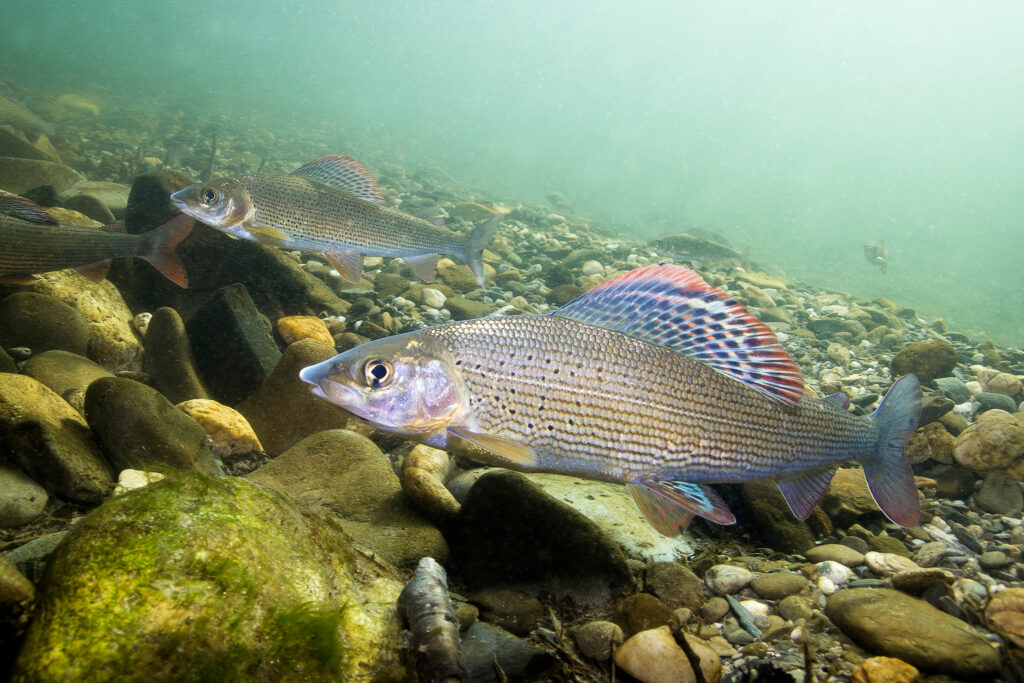
Flow regime alteration, rising water temperatures and predation pressure are identified as among the strongest stressors affecting the long-term stability of European grayling populations (the project’s target species).
The project reports that management effectiveness strongly depends on local ecological, administrative and societal conditions, highlighting the need for flexible and context-specific approaches. Hence, the need for coordinated cross-border monitoring and adaptive management of cormorant predation across Europe.
New tools available for freshwater fish monitoring
An innovative method to estimate fish stocks for European grayling was developed by the project. This tool supports more transparent and reproducible conservation status assessments under Article 17 of the Habitats Directive. It is being presented to and tested by selected regional authorities (responsible for conservation status assessment) and will be made accessible to all responsible – interested – stakeholders.
Early work by the project revealed that advanced monitoring technologies, including AI-supported image analysis, PIT-tagging and GPS-tracking, are strengthening evidence-based management and large-scale ecological monitoring capacities.
Five recommendations for EU freshwater fish conservation
Based on these findings, ProtectFish recommends the following:
- Develop an EU-wide harmonised monitoring framework for cormorant and freshwater fish populations by coordinating existing national monitoring schemes
- Include predation as a recognised ecological pressure when assessing fish populations under River Basin Management Plans
- Support pilot implementation of the ProtectFish “target-stock methodology” in Art. 17 of the Habitat Directive’s reporting across selected Member States
- Use adaptive, site-specific management
- Support shared guidance and exchange of good practices
Read the full ProtectFish Policy Brief to discover the findings and recommendations.