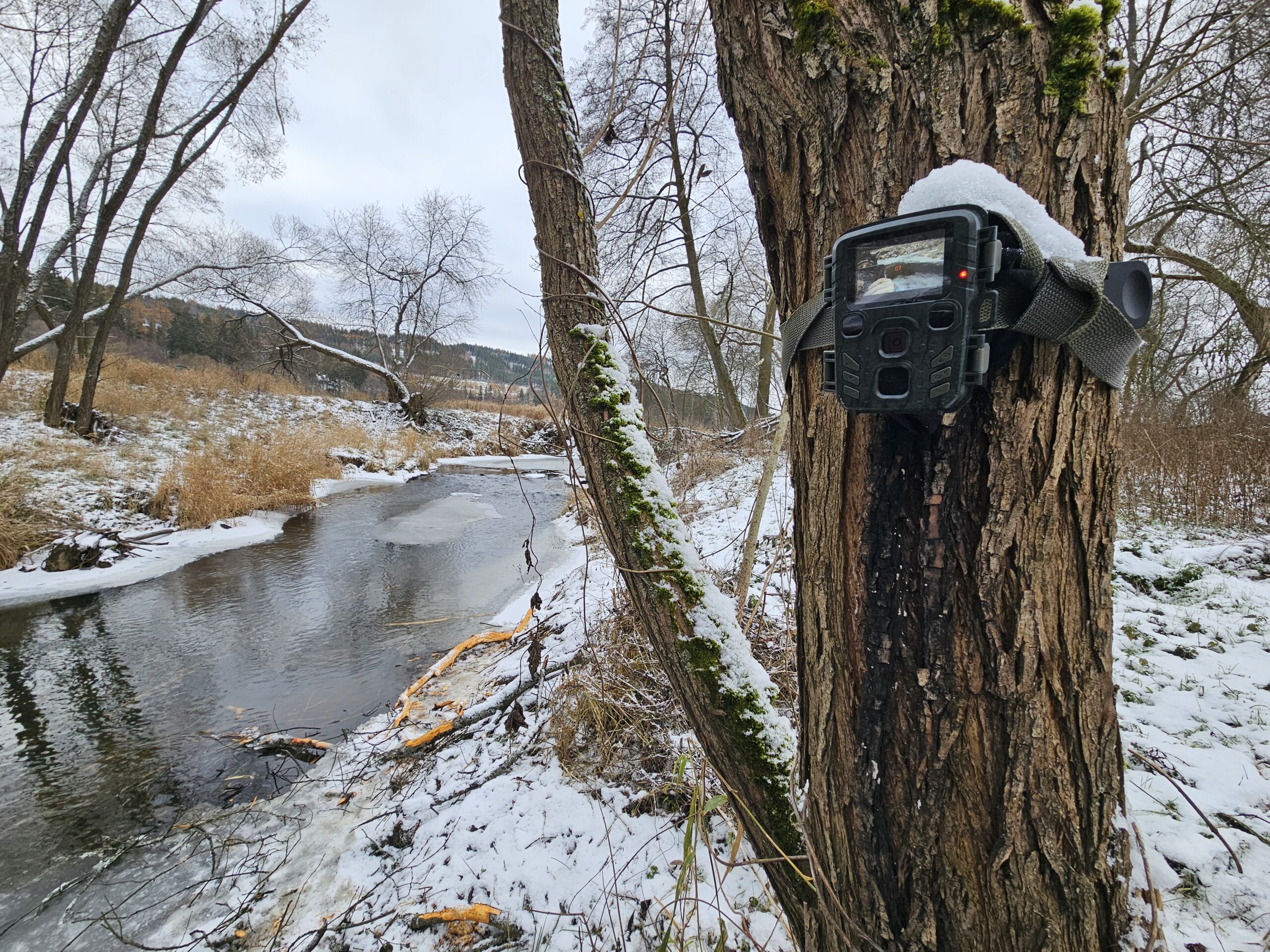
Earlier this year, the Czech Academy of Sciences launched its first experiments in two selected rivers in the Czech Republic. This in the framework of the Protectfish Work Package 4 – “field experiments to study the effect of a decreased predation pressure”. The objective is to investigate how increased habitat complexity and reduced predation pressure can support the recovery of threatened fish species.
Researchers introduced wooden shelter structures into the rivers. To offer protection for fish and set up cameras on nearby trees to monitor predator activity. Yet, recent observations highlighted an unforeseen ecological complication: intense Eurasian beaver (Castor fiber) activity at the experimental locations. The beavers swiftly removed or consumed the wooden materials intended to boost habitat complexity. Which severely limited our ability to assess whether these shelters could safeguard fish against predation. This scenario vividly illustrates the intricate nature of European river ecosystems, where interactions between multiple protected species can both advance and impede conservation research.
Together with the Czech Anglers Union, our ProtectFish partner has selected several river stretches where our targeted species – grayling – is still present, with an existing predation pressure from cormorants.
The selected rivers – two stretches on the Svatava River in West Bohemia and one on the Střela River in the same region – are max. 15 m width in a relatively natural landscape (out of the main urban area) and also naturaly meandering with original tree canopy (mostly alder and willow).
The 2024-2025 winter sampling campaign allowed to get a better picture about fish-eating predators’ activity on these selected river stretches. The experiment during this winter season aimed at analysing whether cormorant exclusion – via mechanical barriers – has an effect on the survival rate of grayling populations.
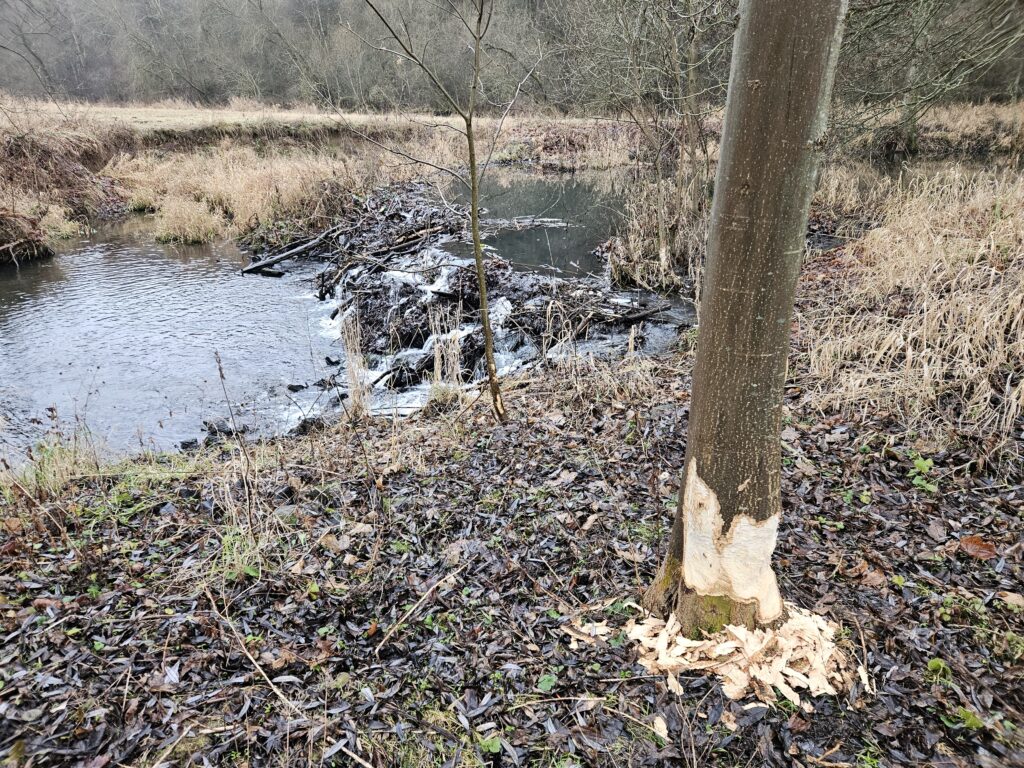
Huge beaver dam on Střela river with apparent beaver logging activity
Testing habitat complexity in 3 Czech river sections
To better understand how habitat structure influences predation dynamics, the Czech field experiments were designed around three distinct habitat treatments:
- Natural sector – let in its original form (i.e. no impact).
- Artificial deterrent sector – covered by the system of ropes & belts to make artificial warning and a mechanical barrier to protect river fish against cormorant predation.
- Historical river habitat sector – modelled to represent medieval river conditions, with fallen trees and branches creating the mosaic of shelters against predators, particularly cormorants but also herons, and otters.
In November 2025, ProtectFish teams carried out these measures along the Střela River. However, in less than two weeks, beavers had eaten almost all of the wooden materials intended to improve the river’s habitat complexity.
BEFORE
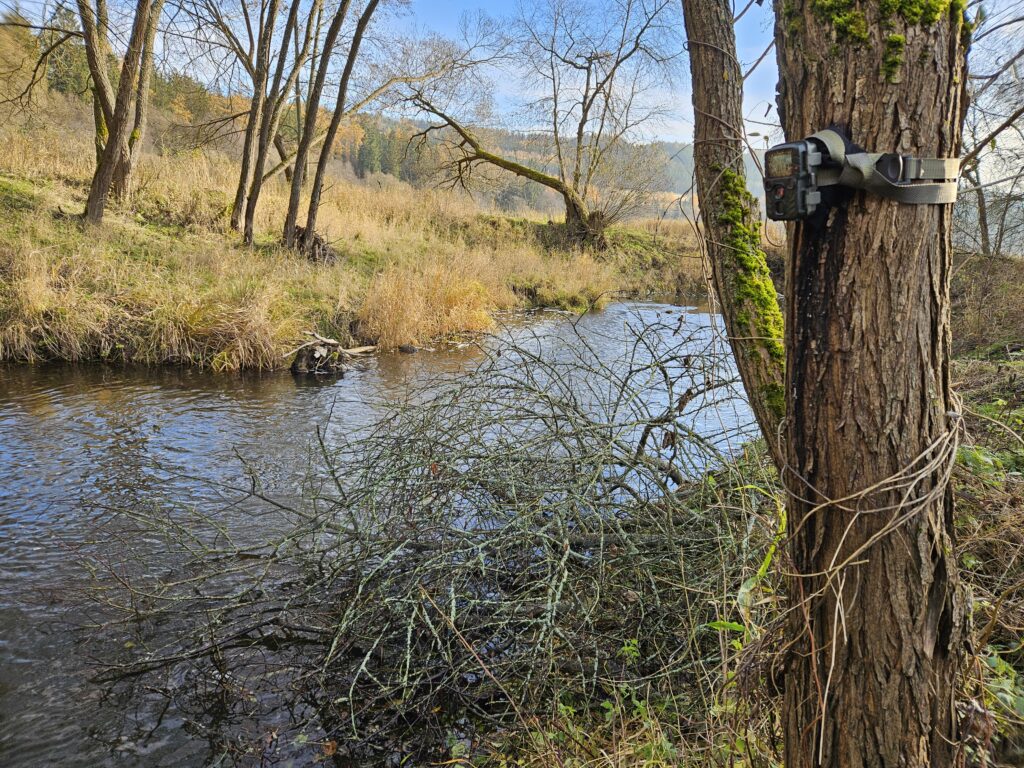
ProtectFish experimental site on Střela River with heaped fallen tree branches simulating increasing habitat complexity (12 NOV 2025)
AFTER
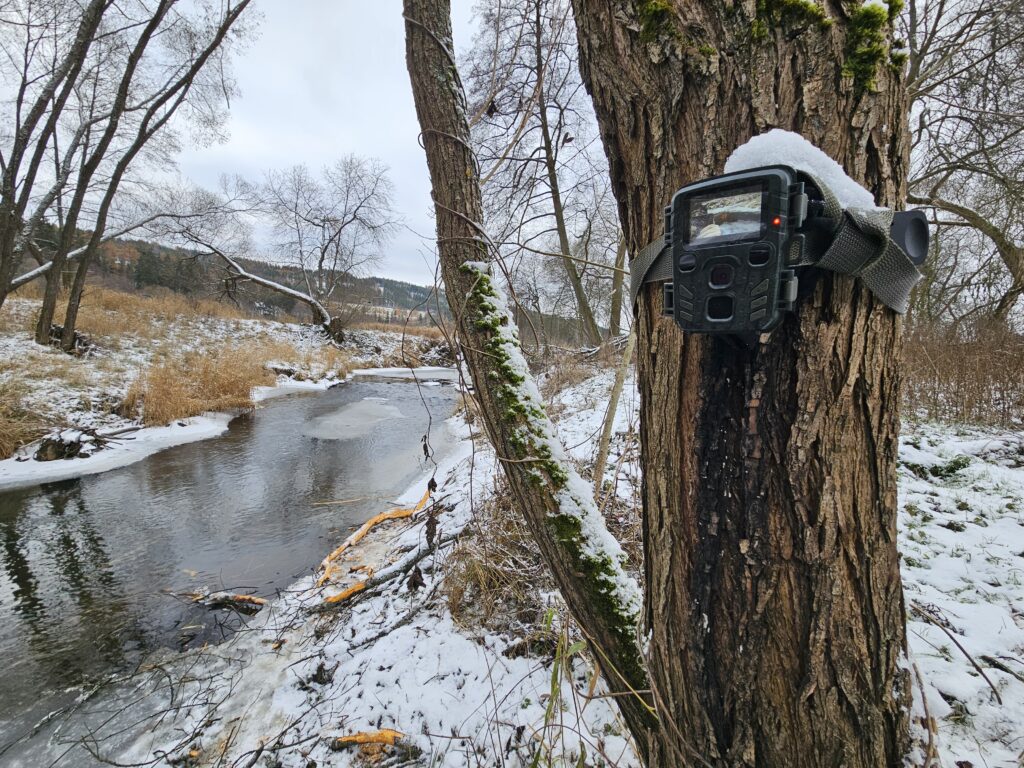
Most of the deposited wooden material eaten by beavers within two weeks
(27 NOV 2025)
Striking an effective balance in conservation policies for endangered species is central to ProtectFish
The Eurasian beaver is widely celebrated as a European conservation success. Once extinct in the Czech Republic, the species returned in the late 20th century. This via natural dispersal from Germany, Austria, and Poland. Later reinforced through targeted reintroductions. Today, the Czech population is estimated at around 20,000 individuals. The species occupies rivers, wetlands, ponds, and reservoirs across the country.
The beaver is strictly protected:
- National level: Czech Act No. 114/1992 and Regulation No. 395/1992
- EU level: Habitats Directive (92/43/EEC)
- International level: Bern Convention
- IUCN: Listed as Least Concern (LC)
The Eurasian beaver (Castor fiber) is the largest freshwater mammal of Continental Europe. And reaches the size of over 1 m and weight of 35 kg. It is a powerful ecosystem engineer whose activities profoundly reshape river dynamics.
However, instead of supporting habitat complexity in ways that protect sensitive fish from predators, the beavers’ unexpected intervention effectively reversed the intended conservation benefits and disrupted ongoing scientific assessments.
The rapid loss of experimental structures not only disrupted ongoing research but also underscored significant long-term ecological considerations. Beaver activity alters river dynamics, creating slower, warmer waters with increased sedimentation—conditions that benefit species such as chub, roach, and bleak. However, these changes diminish habitat suitability for cold-water, fast-flowing specialists, including:
- brown trout (Salmo trutta m. fario)
- grayling (Thymallus thymallus)
- bullhead (Cottus gobio)
Our partners expressed mixed emotions towards this development: “It is a sad but funny story. I am only angry for the time lost!”. They are now seeking alternative methods to achieve their experiment’s goal.
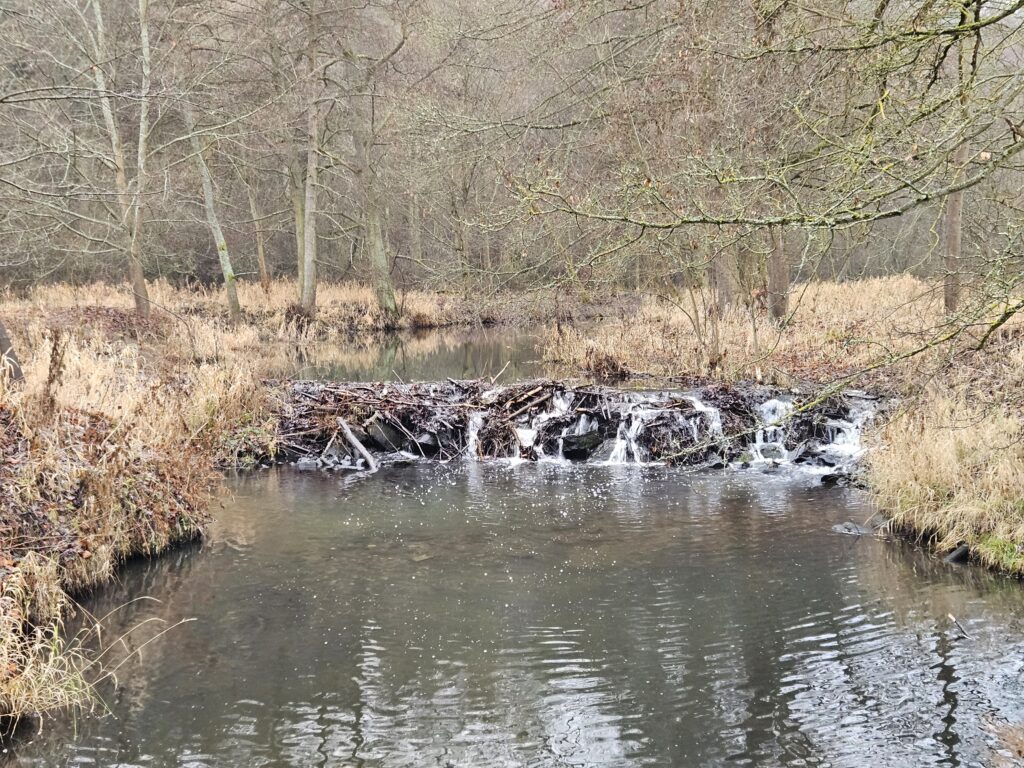
Huge beaver dam on Střela river 14 km upstream the experimental site
(04 DEC 2025)
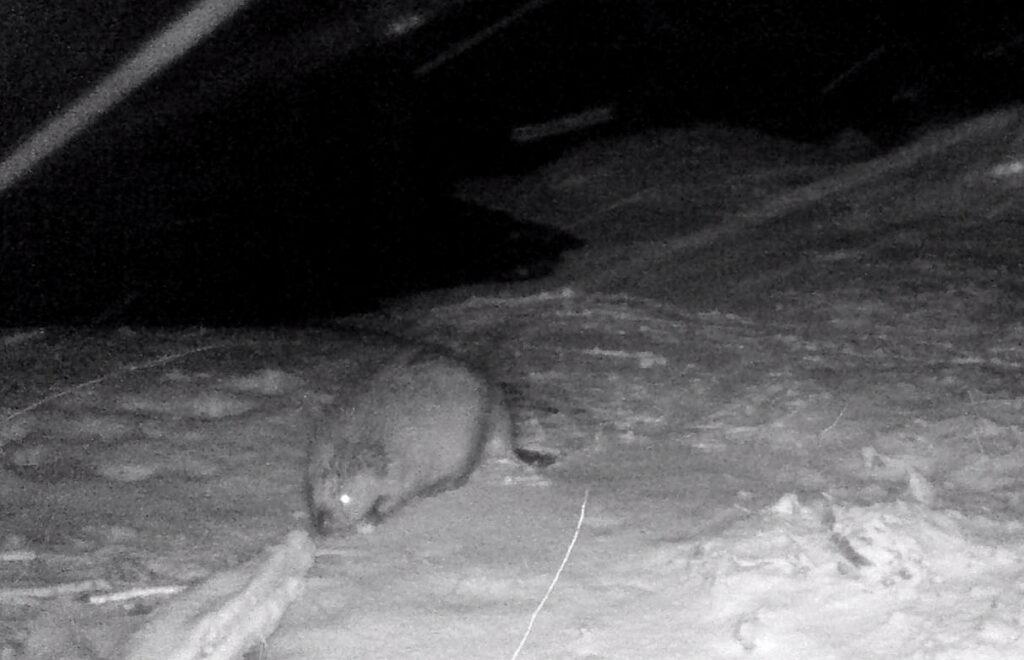
Beaver is active even in severe winter time (camera trap record)